
Hearing Loss and Relationships

“He thinks I’m yelling, but I’m not. I’m trying to speak louder so he can hear me. But after raising my voice and repeating myself multiple times, he thinks I’m aggressive and mad. Upset, he asks me why I’m being so short with him. I just want to be heard, but, sometimes, saying nothing would be much easier.”

Ahhh, the joys of relationships! Quite often, I see the highs and lows of relationships in our clinic—the agitated spouse bringing in her loved one for a hearing test or the concerned child motivating his parents to finally discuss getting hearing aids.

However, I also see the joys of restored communication. When patients are fit with hearing aids, their perspective changes. They finally understand how impeding their untreated hearing loss was. I witness nervous patients rediscover their independence once they no longer need to rely on family members to repeat themselves.

HEARING LOSS ON THE HOMEFRONT

Communication is a vital part of our everyday lives. We interact with people all day: working, parenting, traveling, gathering with family/friends, and running errands. Hearing loss can present challenges when conversing, particularly with strangers or when the location has poor acoustics. Life does not slow down for someone with hearing loss. Often, we see these individuals attempting compensation strategies to get by, such as lip reading or using their loved ones as mediators.

Researchers have evaluated the relationship dynamic between people with hearing loss and their loved ones. Their studies demonstrate that hearing loss produces feelings of frustration, embarrassment, and distress. Partners of those with hearing loss often feel forced to involve their partners in social gatherings and to avoid embarrassing scenarios by smoothing social interactions. This voluntary responsibility can lead to significant stress and strain in the relationship. While one partner is trying to enjoy himself socially, he must also repeat words and phrases back to his hearing-impaired partner.

I hear stories of patients struggling to have conversations even in their own homes. A spouse wonders why the other can’t hear his question while the dishwasher is rumbling and the TV is blaring. He raises his voice, thinking this will solve the dilemma. However, noticing his tone, his spouse feels attacked and accuses him of “shouting and yelling.”

When communication breakdowns occur, both sides feel annoyed, resentful, and irritated. The good news is that help is available!

DO’S & DON’TS OF COMMUNICATION

Communication strategies can go a LONG way, even for someone without hearing loss! Just because your loved ones are fit with hearing aids doesn’t mean they are now able to communicate from rooms away. To optimize conversation and reduce communication breakdowns, consider some of the following tips for talking with your family:

DO:

  • Get their attention (say their names) prior to asking a question or talking.
  • Communicate face to face (visual cues help everyone!).
  • Speak slowly and clearly.
  • Try using different words.
  • Have patience.

DO NOT:

  • Shout or scream.
  • Speak rapidly.
  • Turn your face away or communicate from a different room.
  • Repeat the same phrase louder each time.
  • Get frustrated and say, “Nevermind! Forget it.”

WHAT CAN YOU DO TO HELP?

“Hearing loss very often is such a gradual phenomenon that the person is in denial. You really have to be patient with them in getting them to come forward to get help.”

— Marion Ross

Communication is key to maintaining a healthy relationship. If you or your loved one is reluctant to apply these tips, consider educating yourself on the influence hearing loss can have. Also, share your feelings with your partner. Hearing loss isn’t “their problem.” It is a roadblock in your relationship that is affecting both of you and one that you must overcome together.

The good news is that there are plenty of tools and technology for individuals with hearing loss to use to improve their communication and quality of life. One of the most important contributors to successful hearing aid use is support from loved ones.

We want you to hear your best for yourself and for the people who mean the most to you. At The Hearing & Dizziness Clinic, our job is to walk you through your hearing loss and provide treatment options. Please contact us if you or your loved ones are experiencing hearing loss. Everyone deserves a chance to hear better.

REFERENCES:

Morgan-Jones RA. Hearing Differently: The Impact of Hearing Impairment on Family Life. London and Philadelphia: Whurr Publishers: 2001.

Tjørnhøj-Thomsen, Tine, and Hans Henrik Philipsen. “Hearing Loss as A Social Problem: A Study of Hearing-Impaired Spouses and Their Hearing Partners.” The Hearing Review (2019).
Resolve to Treat Your Hearing Loss in 2022

The new year is quickly approaching and with it comes the hope for a better start! For many, relationships are restored, projects are completed, gym memberships are purchased, and resolutions are made for the coming year. People have a genuine desire to live a better year than the previous one. Unfortunately, they often overlook a very important part of their health—their hearing.

According to Atlanta Hearing Associates, only 20 percent of people with hearing loss seek out treatment, and the people who do seek treatment will wait between 5 to 7 years before receiving a hearing test. This resistance to treatment means that hundreds of people are suffering year after year. They are missing the joys of effortless hearing and depriving their brain of the audible stimulus it needs to stay functioning and alert.

Reasons Hearing Loss Remains Untreated

People refuse or postpone treatment for their hearing loss for several reasons. The most common reasons are the following:

  • Hearing loss is gradual — Typically, people do not wake up one day and notice a large decrease in their hearing ability (unless they received an injury). Most often, hearing loss happens so slowly over time that my patient’s do not even notice the change.
  • Hearing loss is partial — Hearing loss may affect only high-frequency sounds while low frequencies remain the same. A person with partial hearing may assume that the people around him are mumbling.
  • Hearing loss is invisible — Hearing loss is typically painless; and, unlike a bruise, it leaves no physical mark. Problems that can’t be seen are often viewed as small threats that can be ignored.
  • Hearing loss is easily compensated — To some people, hearing loss isn’t a problem that necessitates immediate action. Instead of addressing the problem, people compensate by turning up the television volume and asking people to repeat themselves. Although these actions might postpone treatment, they are far from valid solutions.

Beyond these, another reason that some people postpone treatment is that they have been miseducated about their hearing situation. People may struggle to hear only in noisy environments and suspect (or are told) that their hearing is normal. However, this problem may be caused by an auditory processing disorder.

Overcoming Barriers and Seeking Treatment

There is never a wrong time to acknowledge your hearing loss and seek treatment. The following are three ways you can overcome your resistance and start on the path toward better hearing.

  • Acknowledge your hearing loss — Hearing loss is common. Approximately 1 in every 5 people will develop a form of hearing loss in their lifetimes. Acknowledging the problem is the first step toward treatment. Do you have a loved one who is resistant to scheduling a hearing test? Offer to go in with them and get your hearing tested too!
  • Have your hearing tested — Not sure who to contact first? Give us a call and we can help you figure out who you need to contact first before your first scheduled visit! A hearing test at The Hearing & Dizziness Clinic will identify what is affecting your hearing and whether amplification is needed. I have some couples who come in together to get their hearing tested. This usually helps those who are resistant to getting help.
  • Consider hearing aids — At The Hearing & Dizziness Clinic we can educate you about the latest hearing aid devices and their capabilities. We pride ourselves on giving a thorough explanation as well as demonstrate what a hearing aid will sound like!


Find Treatment Today

Don’t let another year pass you by as you struggle with untreated hearing loss. Overcome your barriers and seek treatment today! If you are experiencing hearing loss call one of our offices to book an appointment, or you can book an appointment online by clicking here.. We are more than happy to assist you as you resolve to make this year the best one for you and your hearing.

References

“Hearing Loss: Overcoming The Barriers To Treatment.” Atlanta Hearing Associates. HearAtlanta.com. Published April 28, 2016. Accessed December 6, 2021. https://www.hearatlanta.com/hearing-loss-articles/hearing-loss-overcoming-barriers-treatment/.

How Often Should You Have Your Hearing Tested By An Audiologist

Most people are accustomed to making regular health checkups a routine part of their medical care. Annual physicals, dental exams, and vision tests are all commonplace; however, few individuals pay as much attention to their hearing. How often you have your hearing tested depends on a few factors, one being age.

  • Childhood: Newborn hearing screenings are essential, of course, and regular checkups throughout childhood are commonplace. Children should have their hearing tested prior to starting kindergarten, before starting any speech therapy plan or if there are any educational concerns.
  • Adulthood: The American Speech-Language-Hearing Association’s (ASHA) guidelines state that healthy adults ages 18-40 years old, who are not experiencing any noticeable hearing loss, should have their hearing tested every three to five years.

We recommend more frequent diagnostic hearing testing for any of the following individuals:

  • People over the age of 60: Presbycusis, or age-related hearing loss. Annual hearing tests are recommended for all adults beginning at the age of 60, regardless of whether or not they are experiencing symptoms. As we age, cumulative damage to the hair cells in the inner ear becomes more prevalent, affecting the ability to understand high frequencies. One out of three adult’s experiences presbycusis by the age of 65; that number increases to one out of two by the age of 75.
  • People who are exposed to loud noises: Noise-induced hearing loss is almost as common as presbycusis, and affects individuals of all ages. Those who are frequently exposed to loud noises have a higher risk of suffering permanent damage to their hearing. These individuals should have their hearing tested once a year. Noise-induced hearing loss affects:
    • People who work in noisy environments (construction or factory workers, dentists, musicians, firemen and teachers),
    • People who regularly participate in noisy activities (concerts, hunting, riding motorcycles), or
    • People who are employed in professions where sudden loud noises are common (law enforcement and the military)
  • People with hearing loss: This might seem counterproductive, but even if you have been diagnosed with hearing loss and wear hearing aids, it is more important than ever to have your hearing tested on a regular basis. Your hearing may continue to change over time, it is important that your hearing aids are properly programmed to ensure you are receiving the maximum benefit. These individuals should have their hearing tested once a year.
  • Diabetics: If you have a health concern such as diabetes it is important to have your hearing tested annually. Over time, blood sugar levels that are too high or too low can damage nerves that affect your hearing in the same manner that they affect your vision. These individuals should have their hearing tested once a year.
  • Cancer patients: If you are battling cancer and having chemotherapy treatments and/or taking ototoxic drugs you should have a baseline test immediately and hearing tests done every couple of months to make sure there is not a severe hearing degradation during your treatment.
  • Vertigo: A hearing test should always be part of your dizziness workup. Certain conditions show up on the audiometric graph which will lead to possible earlier diagnosis of the condition responsible for your vertigo.
  • Tinnitus: Anyone suffering from ringing or noises in their ear should have their hearing tested right away. Tinnitus is the first symptom of many audiological disorders. Although there is no cure for tinnitus, there are several ways that we can manage this condition. These individuals should have their hearing tested once a year.
  • Sudden Hearing Loss: If you notice a sudden change or decrease in your hearing, you should promptly have your hearing tested. Often these losses are sensorineural hearing losses that are misdiagnosed as nasal or sinus conditions. Time is of the essence if we want to save your hearing. A diagnostic hearing test will determine the appropriate course of treatment.

SUDDEN SENSORINEURAL HEARING LOSS (SSNHL)

One sign of sudden sensorineural hearing loss could be the loss of at least 30dB of hearing in three connected frequencies within a 72 hour period.

Everyone’s hearing naturally declines with age, and people often have one ear that hears better than the other. If hearing loss appears suddenly in one ear for no apparent reason, you may have experienced a sudden sensorineural hearing loss, a kind of nerve deafness.

Those who experience sudden sensorineural hearing loss generally discover hearing loss when waking up in the morning. Others might notice when they try to use the deafened ear, such as using a phone. Many note a loud “POP” just before they lose their hearing. People with sudden deafness can also experience one or more of these symptoms: dizziness, feeling of ear full­ness, ringing or buzzing in the ears (tinnitus).

If caught in time, sudden sensorineural hearing loss can be treated and corrected by an ear, nose and throat surgeon. Sudden sensorineural hearing loss symptoms should be seen as a medical emergency. Prompt treatment significantly increases the chance that at least some hearing can be recovered.

It is estimated that sudden sensorineural hearing loss affects between one and six people per 5,000 every year, but the actual number of new cases can be much higher, due to the fact that it often goes misdiagnosed­. Sudden sensorineural hearing loss can affect people of all ages, but is most com­monly seen in adults in their early 40s and 50s.

Diagnosing Sudden Sensorineural Hearing Loss

Ruling out conductive hearing loss, or hearing loss due to an obstruction such as fluid or wax in the ear is a good place to start. For sudden hearing loss without any clear cause upon examination, you should be referred to an ear, nose and throat surgeon and audiologist right away.

The ear, nose and throat surgeon can medically treat the condition at hand.

The audiologist will determine if the hearing loss is conductive or sensorineural with a diagnostic hearing test. Additional testing completed by the audiologist may include: (1) Tympanogram, (2) Acoustic reflexes, 3) Distortion product otoacoustic emissions (DPOAE) and/or (4) Auditory brainstem response (ABR). The information gathered by the audiologist will help guide the ear, nose and throat surgeons’ treatment plan.

What Causes Sudden Sensorineural Hearing Loss?

(1) Viral infections. One in four patients with sudden sensorineural hearing loss reports suffering from an upper respiratory infection within a month before the hearing loss. What virus caus­es sudden hearing loss? Viruses associated with sudden hearing loss include mumps, measles, rubella, as well as meningitis, syphilis and AIDS, among many others.

(2) Tumors. A variety of tumors in the ear, benign as well as malignant, may cause sudden sensorineural hearing loss.

(3) Head trauma affecting hair cells, eardrum or bones. Par­tial or total recovery from head injury induced hearing loss can be expected.

(4) Drugs and insecticides. Erectile dysfunction medications, a long list of prescription drugs and chronic abuse of painkillers may cause sudden hear­ing loss. Insecticides such as malathion and methoxy­chlor have been associated with sudden hearing loss in both ears (binaural sudden sensorineural hearing loss).

(5) Immunological disorders.

(6) Vascular disorders disrupting blood flow to the ear.

(7) Developmental abnormalities.

(8) Idiopathic disorders, such as multiple sclerosis, Meniere’s disease and others.

Sudden Sensorineural Hearing Loss Treatment

The most common treatment for sudden sensorineural hearing loss, especially when the cause is unknown, is corticosteroids administered by an ear, nose and throat surgeon. Steroids can treat many disorders and usually work by reducing inflam­mation, decreasing swelling, and helping the body fight illness. Additional treatments may be needed if you discover an underlying cause of your sudden sensorineural hearing loss.

It is very common for virally induced sudden hearing loss to be misdiagnosed as a middle ear infection. As a result, the typical treatments of middle ear infection, usually caused by bacteria, do not affect the virus actually causing the problem.

HOW DO YOU RECOGNIZE THE DIFFERENCE?


SYMPTOM MIDDLE EAR INFECTION VIRAL EAR INFECTION
Hearing loss in both ears Frequently Rarely
Pain Frequently Never
Pressure in ears Frequently Sometimes
Dizziness, tinnitus or vertigo Rarely Frequently
Onset Gradual Sudden
Appearance of eardrum Fluid behind eardrum or

it looks opaque

Appears normal
Drainage Sometimes Never
Usual treatments Antibiotics Trans-tympanic steroid injection
Misdiagnosis leads to Spread of infection to other parts of the head Permanent hearing loss

Wax Removal: Earigator

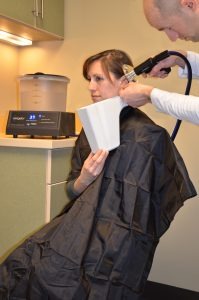
We are always searching to add new services to our clinic. We’ve always offered wax removal, but now we offer what many are calling the “spa” version of ear wax removal. All three clinic locations now use the Earigator system to remove stubborn wax from your ears.
We offer all three methods of wax removal. The Earigator has changed how we remove wax from our patients ears. We can now remove wax during one visit, when in the past some patients had to return multiple times in order for us to get all the wax out.

We can complete wax removal at all four clinic locations.

Watch the video below to “see” the Earigator in action.


At Home Epley

In these novel times of “patient self treatment”,  I have seen a stark and dramatic upswing of patients doing “At Home Epley maneuvers”.  From your online “google” research you have learned that the Epley maneuver is an exercise of sorts that involves manipulating and maintaining the head in certain positions to move the calcium deposits out of the semicircular canals and back into the parts of the ear to which they belong. The Epley maneuver is indicated for clients who have been diagnosed with benign paroxysmal positional vertigo (BPPV). Not everyone who is dizzy has BPPV.

Is The Epley maneuver for everyone? Unfortunately it is not a vestibular cure-all.

Questions you should ask yourself:

  1. “How long do your symptoms last?” If longer than a few seconds, this is generally not a condition that can be helped with The Epley. Likewise, if you have had these symptoms for years, this is not BPPV.
  2. “Do you have any other symptoms in your ears?” Ringing, buzzing, pain, aural fullness, discharge, changes in hearing, and of course dizziness or vertigo are all conditions which would warrant a referral to an audiologist (not a hearing aid clinic, there is a difference).
  3. Which ear is affected? Performing the Epley is quite specific. Head at 30° is just that. Very few people know when their head is at 30° of their own avail. Doing the Epley incorrectly makes it far more likely to be not only unsuccessful, but detrimental. Similarly, which canal is affected? Is this a canal that The Epley could serve? Do you need the Semont? The Brandt-Daroff? The BBQ roll? The GRM?
  4. Is there a confirmed positive Dix Hallpike with nystagmus? Is the nystagmus upbeating or sidebeating? Is it rotational in nature?
  5. Has a carotid artery screening been performed? This can be extremely unnerving and dangerous to uncover while performing the Epley Maneuver on yourself.
  6. Have you googled “drop attack”? Tumarkin’s otolithic crisis can occur post-Epley and is quite terrifying.

It is important to know that it is not safe to use YouTube as a resource.There are currently over 3,300 videos available on YouTube related to performing the Epley maneuver. Out of these videos, only 21 were rated as accurate by a group of neuro-otologists.* Credible YouTube videos were produced from organizations like the American Academy of Neurology.

The point this post: DO NOT DO THE EPLEY ON YOURSELF.

*A prescription for the Epley maneuver: www.youtube.com?

Kevin A. Kerber, James F. Burke, Lesli E. Skolarus, Brian C. Callaghan, Terry D. Fife, Robert W. Baloh, A. Mark Fendrick, Neurology Jul 2012, 79 (4) 376-380; DOI: 10.1212/WNL.0b013e3182604533

Bernice wrote a book!!!

You may not see me in the clinic as often as you would like, but I’ve been pretty busy:

I got married
I had a son
I co-authored a book

Yes, I co-authored a book. We are in the final stages and hope it will be available by summer 2023. I don’t want to release too many details, but rest assured I will let you know when it hits bookshelves. In the meantime, I want to introduce you to my brilliant co-author, Dr. Keith N. Darrow. Dr. Darrow is an expert in Speech and Hearing Bioscience and Technology with a doctoral degree from the joint Massachusetts Institute of Technology (M.I.T) and Harvard Medical School program. He is a former Clinical Professor at Northeastern University (Boston, MA) and is currently a tenured professor at Worcester State University.

Dr. Darrow’s clinical experience is vast and includes a clinical fel- lowship at the Department of Otolaryngology at Brigham and Women’s Hospital (Boston, MA) and a trainingship at the Audiology De- partment in the East Orange (New Jersey) Veterans Association Hospital. He is the owner of the Hearing and Balance Centers of New England and founder of the Healthy Hearing Foundation of New England, as well as a board member of the Sound of Life Foundation (both non-profit organizations dedicated to providing education and hearing health care for those in need). He was recently named the Director of Audiology Research at Intermountain Audiology and has chosen to lead the Excellence In Audiology movement across the country.

Dr. Darrow is a nationally recognized speaker, trainer, and researcher and has been conducting research at the Massachusetts Eye and Ear Infirmary for over fifteen years. His publications and research have been cited over 550 times.

Below is a video of Dr. Darrow that I hope you will enjoy.


Retail Model vs. Medical Model: Understanding the Difference in Hearing Care!

When it comes to addressing hearing loss, it’s essential to recognize the contrasting approaches offered by retail and medical model clinics. The disparity lies not only in the business structure but also in the level of comprehensive care and patient-centered focus. Let’s dive into the key distinctions and why choosing a medical model clinic can make a significant difference in your overall hearing health.

Retail locations often operate under the influence of hearing aid manufacturers, either directly or indirectly. Their primary goal is to sell as many hearing aids as possible. While hearing aids can undoubtedly be life-changing devices, it’s crucial to consider the impartiality of the recommendations provided in a retail setting. On the other hand, medical model clinics, like ours, are local and independently owned, with no affiliation to any specific hearing aid manufacturer. This allows us to prescribe the best solutions for our patients in an unbiased and personalized manner.


One of the significant disparities between retail and medical model clinics lies in their objectives. Retail clinics prioritize maximizing hearing aid sales, often utilizing tactics such as offering “free hearing tests” to attract customers. However, medical model clinics focus on the comprehensive assessment and treatment of hearing loss, recognizing that a thorough evaluation requires time and expertise, which comes with associated costs. By investing in a medical model clinic, you are receiving a higher standard of care, personalized recommendations, and a commitment to your overall well-being.

Moreover, retail locations tend to limit their scope to adults with straightforward cases of hearing loss, aiming for quick and straightforward transactions. In contrast, medical model clinics, like ours, embrace a patient-centered approach that extends beyond age and simple diagnoses. We provide care for patients from birth, offer specialized services for tinnitus management, and work with individuals concerned about their dizziness or balance. Our commitment to serving a wide range of patients underscores our dedication to comprehensive hearing care.

Another crucial aspect to consider is the compensation structure within each model. Retail clinics commonly operate on a commission-based system, where salespeople receive incentives for selling specific hearing aid brands. This may introduce bias and influence the recommendations provided to patients. In contrast, medical model clinics, like ours, do not offer commissions. We prioritize ethical practices and patient-centered care, ensuring that our recommendations are solely based on your individual needs and the best solutions available.

Furthermore, medical model clinics recognize the intricate relationship between hearing and cognitive health. We understand that addressing hearing loss goes beyond restoring auditory abilities; it involves assessing and supporting your cognitive well-being. Therefore, medical model clinics often incorporate cognitive screenings as part of their comprehensive evaluations. This holistic approach ensures that your overall cognitive health is considered and addressed alongside your hearing concerns.

Aural rehabilitation is another vital component of the medical model. While retail clinics tend to focus solely on the sale of hearing aids, medical model clinics understand that treatment extends beyond the device itself. We offer aural rehabilitation programs that encompass counseling, communication strategies, and ongoing support. This comprehensive approach empowers patients to adapt to their improved hearing, maximize their communication abilities, and enhance their overall quality of life.

Choosing a medical model clinic means investing in your long-term hearing health and overall well-being. By selecting a local, independent clinic with no affiliation to specific hearing aid manufacturers, you can be confident in receiving unbiased recommendations, patient-centered care, and access to a comprehensive range of services. Prioritizing your hearing health is an investment worth making, and with a medical model clinic, you are truly getting what you pay for – exceptional care tailored to your individual needs.

Understanding Your Tinnitus

That Ringing in Your Ears? It’s Not in Your Head (Well, Actually… It Is)

You’re lying in bed, house silent, and there it is again: that buzzing… that ringing… that high-pitched phantom sound that no one else seems to hear. You start wondering: Is this normal? Is this permanent? Will it ever stop?

Welcome to tinnitus. (Spoiler: You’re not alone.)

An estimated 50 million people in North-American and nearly 1.5 billion people worldwide live with tinnitus. It’s one of the most common sensory disorders on the planet — right up there with hearing loss. And guess what? Most people with tinnitus also have some level of hearing loss. And vice versa.

So, no. You’re not imagining it. And no, you’re not crazy.

But you might feel that way sometimes, because tinnitus has a way of taking up space in your brain — interfering with sleep, concentration, conversations, and even your mood. It can feel loud, even in the quietest room.

So… What Is Tinnitus, Exactly?

Clinically, it’s defined as a phantom perception of sound. In plain English: your brain hears a sound that isn’t actually there.

It might sound like:

  • Ringing
  • Buzzing
  • Whooshing
  • Humming
  • Cicadas on espresso

Some only hear it in silence. Others hear it all the time. But one thing’s true for everyone: it’s exhausting when you don’t know why it’s happening… or what to do about it.

Why Is This Happening to Me?

Let’s talk science for a sec. Most cases of tinnitus are the result of neural damage — tiny breakdowns in the ear-to-brain communication highway.

And the top culprit?
Age. (Yep, it’s that guy again.)

But it could also be:

Noise exposure (a rock concert in 1998… or your lawnmower every weekend)

  • Certain medications (even the “harmless” ones like ibuprofen)
  • Viral infections (yes, even that one)
  • TMJ issues, vascular conditions, or thyroid imbalances
  • So while the cause might vary, the effect is often the same: your brain isn’t getting the usual signals from your ears. So it turns up the volume. It tries to fill in the gaps.

Your Brain Is Trying to Help (But Ends Up Being Really Annoying)

This whole thing is called central gain — your brain compensates for the hearing loss by becoming overly sensitive. It’s like your brain becomes that one friend who insists on speaking for you at parties. Helpful? Kind of. Embarrassing and confusing? Absolutely.

It’s similar to phantom limb pain. When someone loses a limb, their brain sometimes still feels it there. In the case of tinnitus, your brain fills in missing sound with… well… sound that doesn’t exist.

Good News: You’re Not Stuck With It

Let’s bust a myth:

“There’s nothing I can do about the ringing in my ears.”

Wrong. In most cases, there are very real, very effective treatment options that can dramatically reduce (or even eliminate) your perception of tinnitus.

🎧 Sound Stimulation

The gold standard in tinnitus treatment is prescriptive sound technology — specialized, FDA-regulated devices that help rebuild the ear-to-brain connection. Think of it like physical therapy… for your auditory system.

In fact, 100% of studies between 2010 and 2020 showed that patients using this technology had significant improvements. Some even said their tinnitus disappeared during the day.

🧠 Brain Training

Pair sound therapy with a little mental gymnastics, and you’ve got a winning combo. A recent study in The Journal of the American Medical Association (JAMA) found that brain training tools — like BrainHQ — can improve memory, focus, and reduce the perception of tinnitus.

We’re still learning here, but the early results are promising. Brain plasticity FTW!

You Don’t Have to Figure This Out Alone

Tinnitus can feel isolating. But it doesn’t have to be.

If your ears are ringing, buzzing, hissing, or playing a solo symphony no one else can hear — don’t ignore it. Help is available. Real, science-backed, personalized help. Because you deserve to turn down the noise in your head and tune back into your life.

Introducing Our Esteemed Speaker: Nashlea Brogan, Doctor of Audiology, Audiologist, Advocate!

2023_HDC_Sym_flyer.v2

We are honoured to present our distinguished speaker, Nashlea Brogan, Doctor of Audiology and Audiologist extraordinaire! With a passion for empowering those with hearing loss, Nashlea has dedicated her illustrious career to improving lives through the latest advancements and tools in Audiology.

As a Cochlear Implant (CI) user herself, Nashlea understands firsthand the challenges that accompany hearing loss and its treatment options. Her personal experiences have fueled her drive to provide patient-centered care that truly makes a difference in the lives of her patients. With a late onset progressive hearing loss, she brings a unique perspective that enhances her ability to empathize and deliver long-term, comprehensive care.

For the past 19 years, Nashlea has been the sole owner of a renowned audiology practice, where she has upheld a steadfast commitment to providing the highest level of progressive care to her patients. Whether she’s offering education, treatment options, or counselling to individuals and families impacted by hearing loss, or leading her professional team, she leaves no stone unturned in her pursuit of making a meaningful impact.

Dr. Brogan’s dedication extends beyond her private practice. She actively engages in advocacy efforts to raise awareness about the far-reaching impact of hearing loss. With her expertise, she sheds light on crucial topics such as cognitive health, mental well-being, and the realities of living with hearing loss. By expanding the dialogue, she strives to create a more inclusive and supportive society.

We are privileged to have Nashlea as our esteemed speaker, sharing her wealth of knowledge and experiences. Prepare to be enlightened as she delves into the profound implications of hearing loss and its broader effects on our lives. Join us for an enlightening session that will leave you inspired and equipped with a deeper understanding of the importance of hearing health.

We’re excited to invite you to this informative event. Join us at Caesars Windsor Casino in the Augustus Ballroom for an enlightening discussion on “Diabetes, Dementia, and Hearing Loss.”

This event aims to shed light on the connections between these three important health factors and how they can impact your overall well-being. It is a must-attend event if you fall into any of the following categories:

1️⃣ If you are over the age of 50

2️⃣ If you have experienced Tinnitus (ringing/buzzing/chirping sounds in the ears)

3️⃣ If your doctor has ever told you that you were diabetic or pre-diabetic

4️⃣ If you have high blood pressure

5️⃣ If you sometimes have difficulty hearing, especially in background noise

6️⃣ If you are retired from a noisy job (examples include teachers, factory workers, police officers, or firemen)

7️⃣ If you forget more than you used to or are having more ‘Senior Moments’
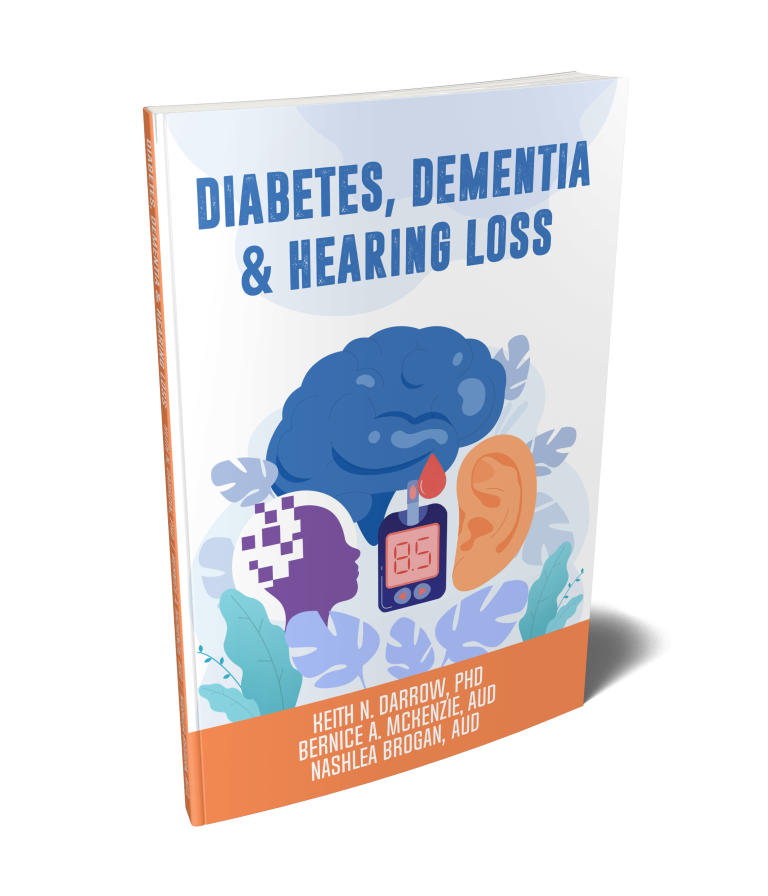
This educational event is designed to provide valuable insights into the correlations between diabetes, dementia, and hearing loss, and how they can impact your life. Don’t miss this opportunity to expand your knowledge and gain a deeper understanding of these crucial topics.

Tickets are required for attendance, so make sure to secure yours in advance to reserve your spot. We can’t wait to see you at this enlightening event!